Integrating Traditional Taiwanese Space
龍潭龍元宮 人神共創的痕跡— 設計導入傳統場域
龍潭龍元宮 人神共創的痕跡— 設計導入傳統場域
Client | Longyuan Temple, Longtan, Taoyuan
Scope | Curatorial direction, spatial design, visual integration
The reorganization of the temple is not only about faith and religious narratives, but also about the long-standing bond between the local community and the temple itself. Over the past 200 years, the people of Longtan have continuously expressed their gratitude to the deity, while also passing on this sense of gratitude to the next generation—those who have left home and those who return. What is being inherited is not only devotion, but also an understanding of what Longyuan Temple means to Longtan. In this sense, the process of reorganizing the temple becomes a way for people to tell its story to others.
This design intervention takes the relationship between Longtan and Longyuan Temple as its core. Through clearer communication, visual language, and spatial reorganization, the project enables people to better understand, use, and narrate the temple, turning design into a pathway for cultural continuity.
Traces of Co-Creation Between Humans and Deities
What kind of presence has Longyuan Temple become for Longtan, after two centuries of collaboration between humans and deities?
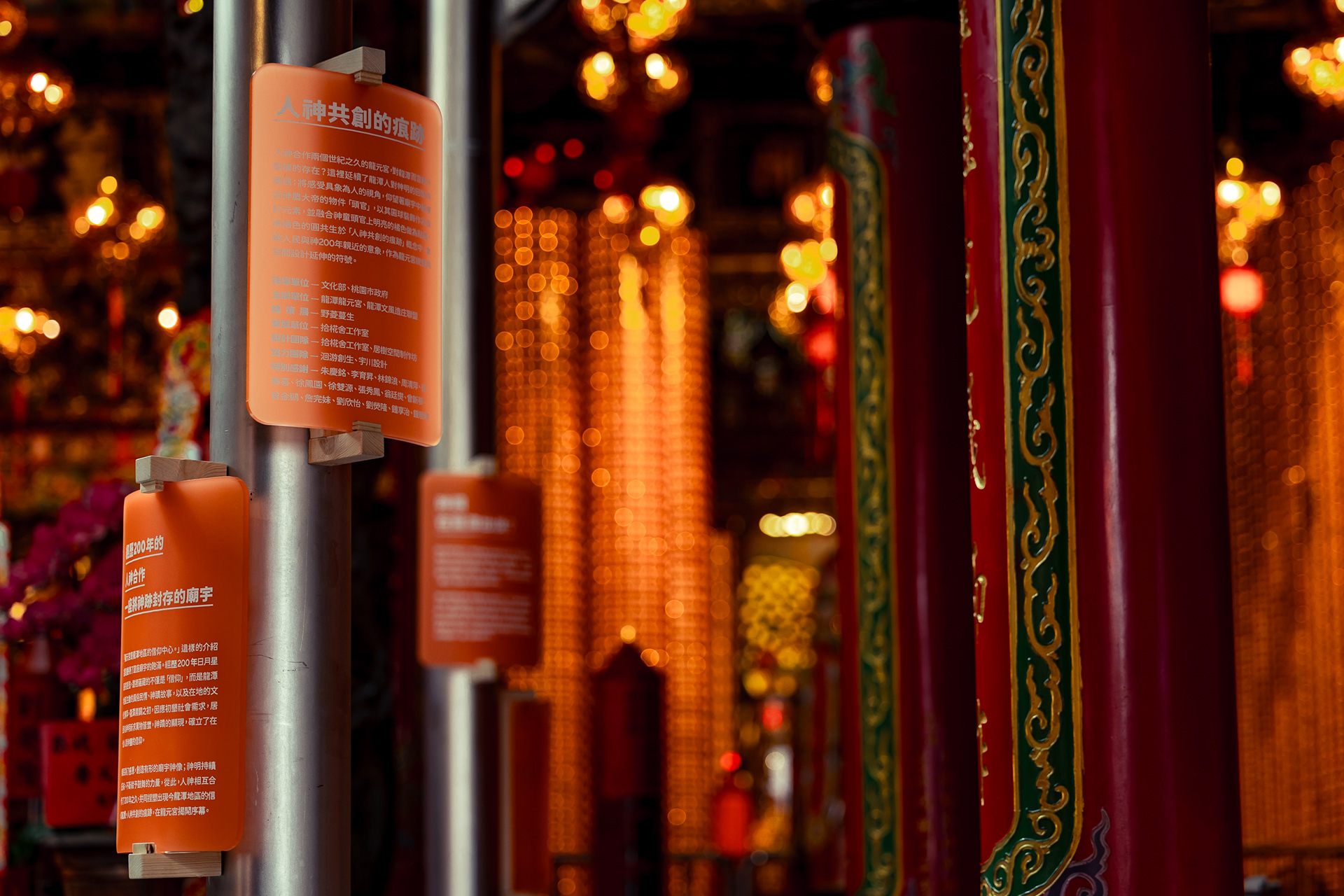
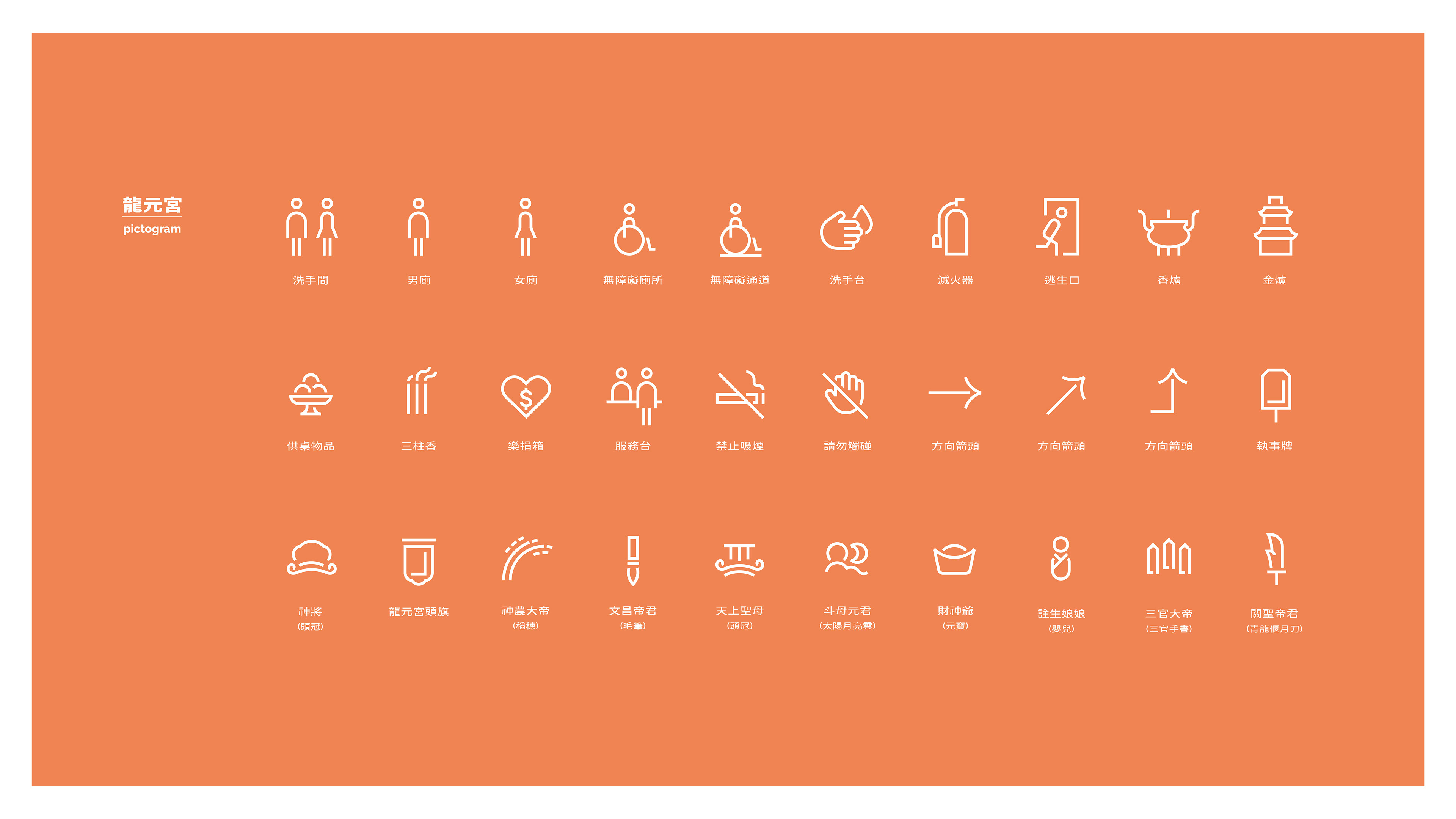
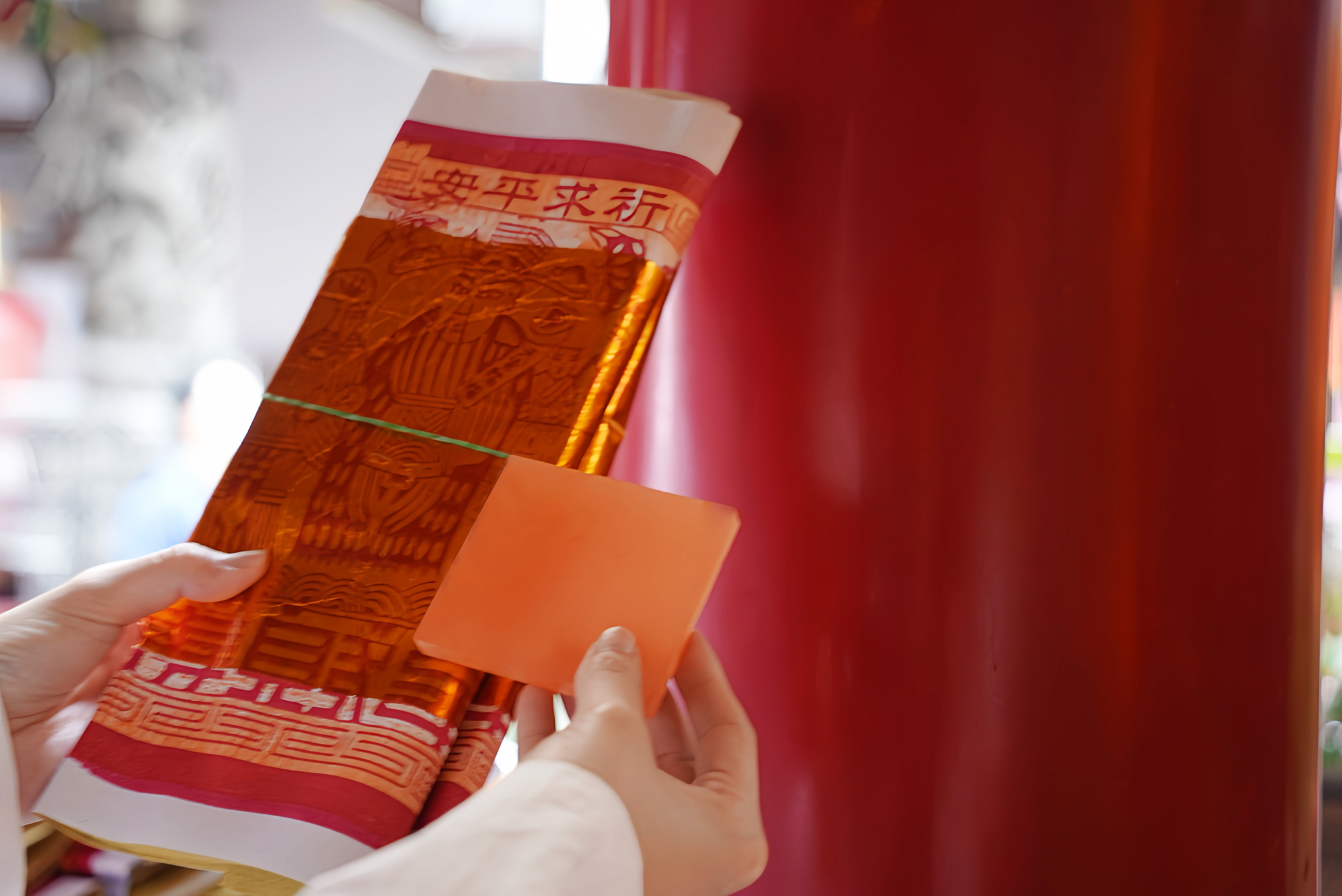
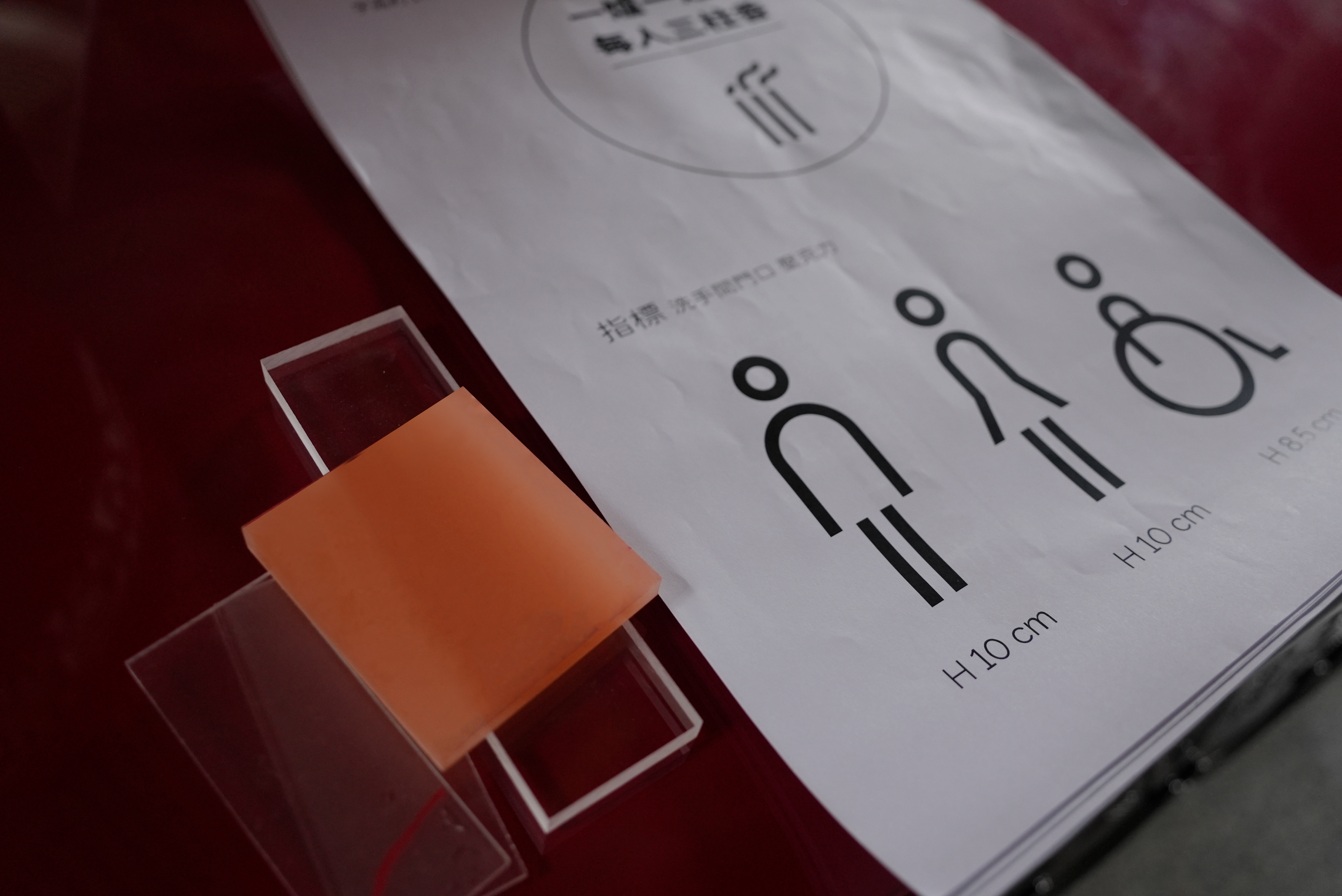
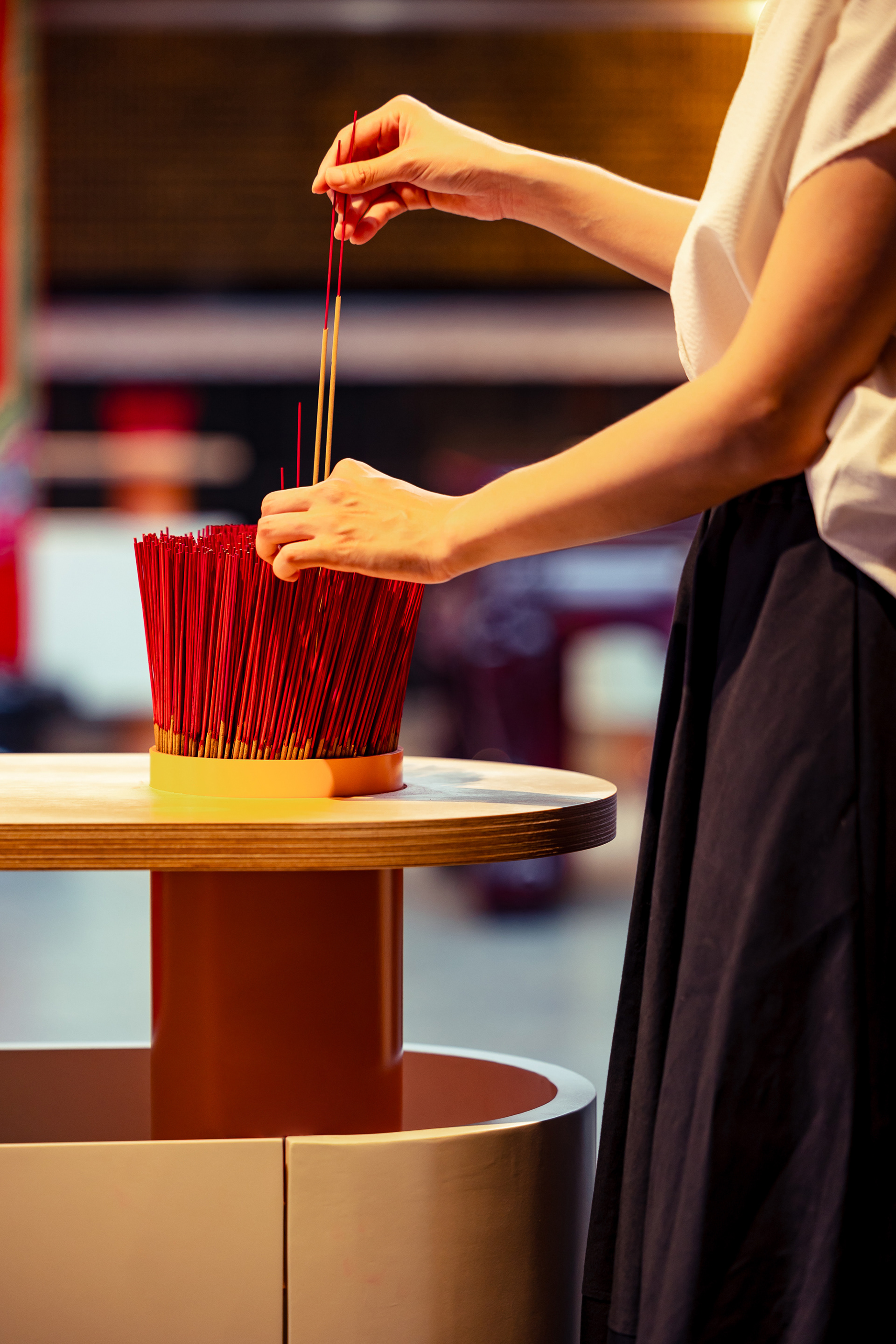
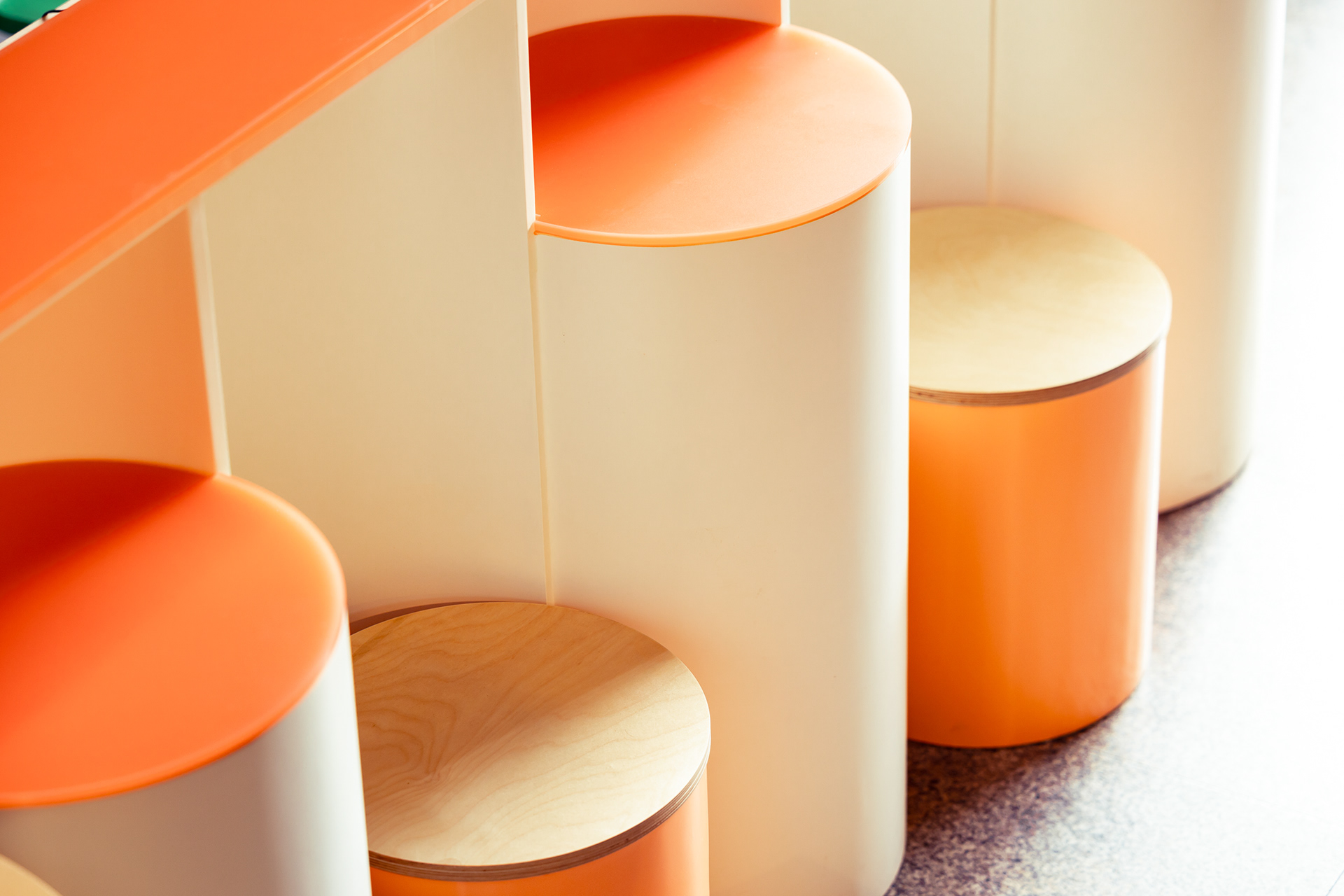
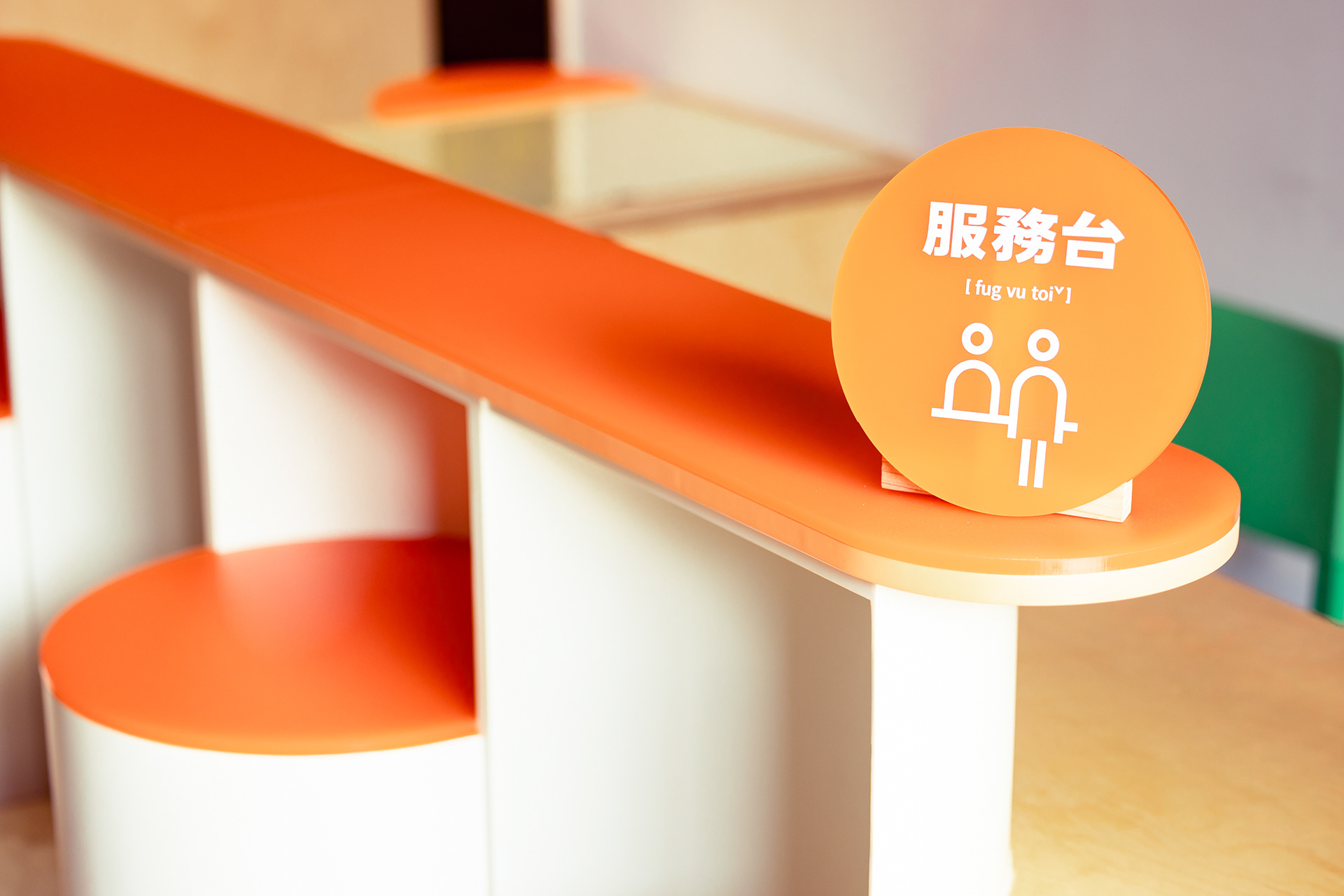
Here, the memories and gratitude that the people of Longtan hold for the deity continue to endure. From a human point of view, the design looks upward to the Touguan—the object within the temple closest to Shennong Dadi. Its spherical ornamentation was adopted as a key design motif, combined with the vivid orange found on the young attendant’s headpiece as an accent color.
Here, the memories and gratitude that the people of Longtan hold for the deity continue to endure. From a human point of view, the design looks upward to the Touguan—the object within the temple closest to Shennong Dadi. Its spherical ornamentation was adopted as a key design motif, combined with the vivid orange found on the young attendant’s headpiece as an accent color.
These translucent orange circles are woven into the concept of “traces of co-creation between humans and deities,” symbolizing the closeness that worshippers in Longtan and the deities have shared for over 200 years. They become an extended visual and spatial symbol of Longyuan Temple.


A Temple Shaped by 200 Years of Collaboration Between Humans and Deities
To describe Longyuan Temple simply as “the center of faith in the Longtan area” would not do justice to the richness of this place.
Across two centuries of changing seasons and passing time, what has accumulated here is not only faith, but also the vivid customs of Longtan, stories of divine miracles, and the essence of its local culture.
Across two centuries of changing seasons and passing time, what has accumulated here is not only faith, but also the vivid customs of Longtan, stories of divine miracles, and the essence of its local culture.
When Longtan was first settled, residents prayed to the deity for abundance in response to the needs of an early agricultural society. The manifestation of miracles gradually established the community’s faith in the divine.
Out of gratitude, worshippers and local residents created tangible temple statues and sacred forms; in return, the deities continued to offer protection and encouragement. From that moment on, humans and deities have, for 200 years, shaped together the religious landscape of Longtan as it exists today.
Out of gratitude, worshippers and local residents created tangible temple statues and sacred forms; in return, the deities continued to offer protection and encouragement. From that moment on, humans and deities have, for 200 years, shaped together the religious landscape of Longtan as it exists today.
The traces of co-creation between humans and deities begin to unfold at Longyuan Temple.
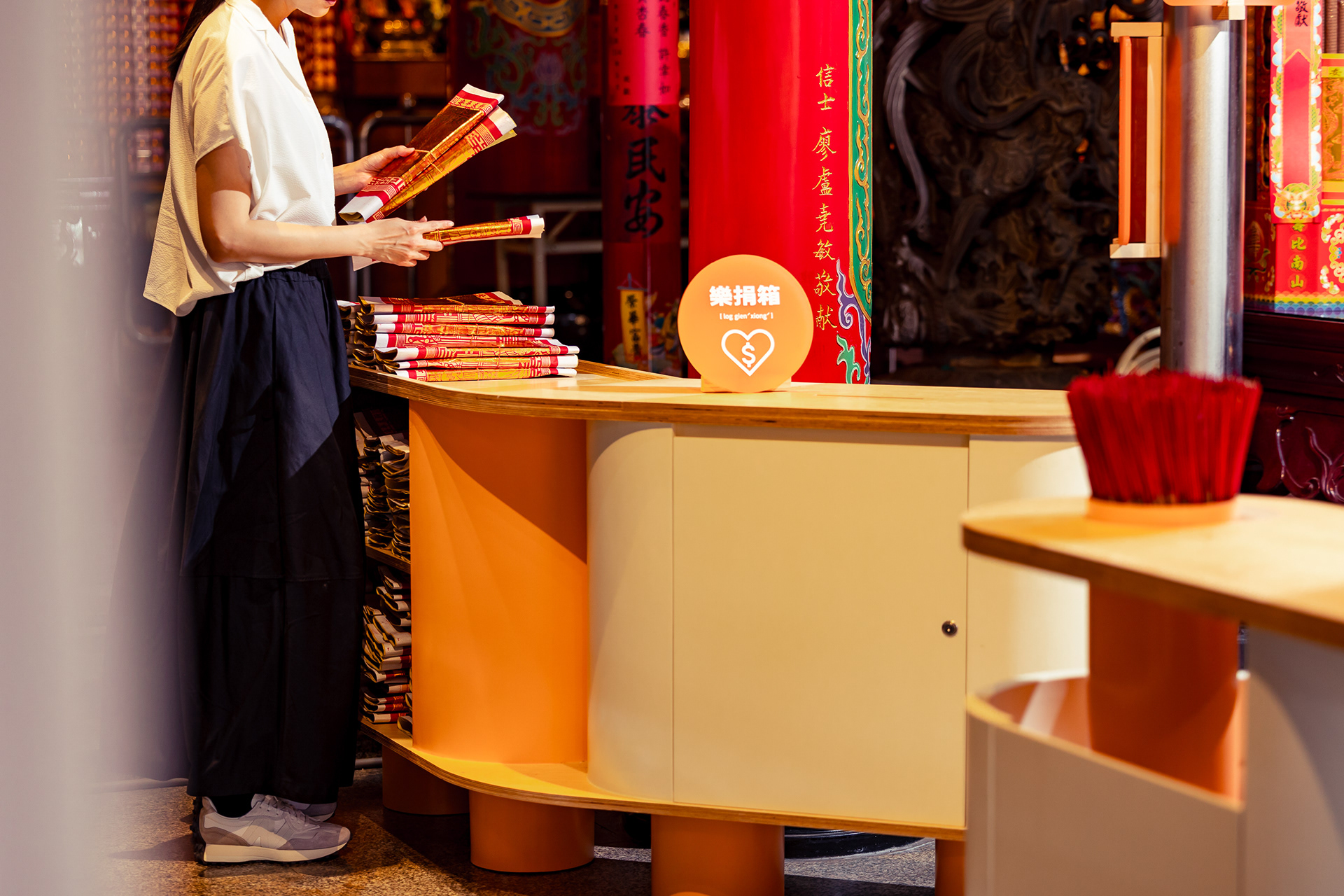
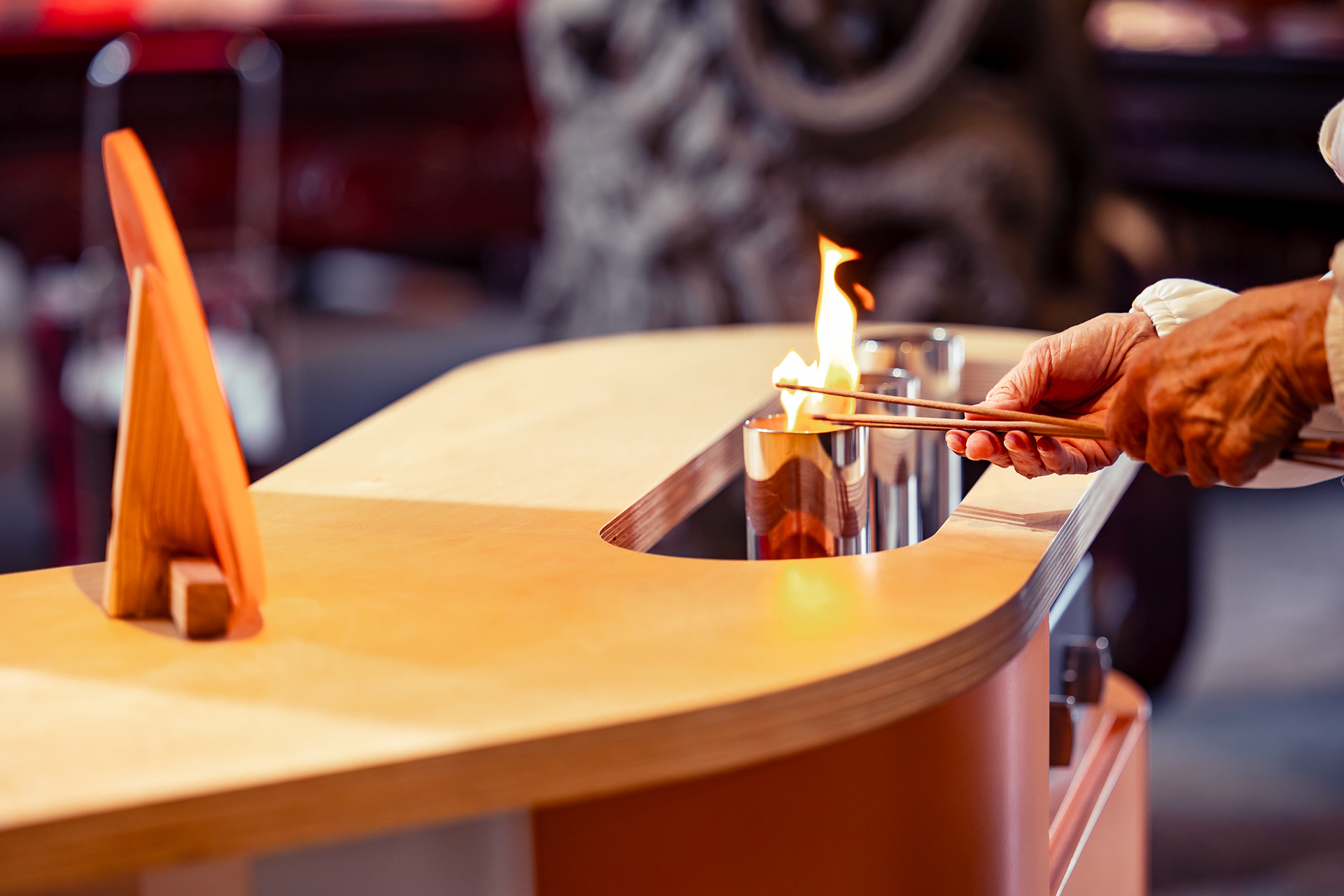


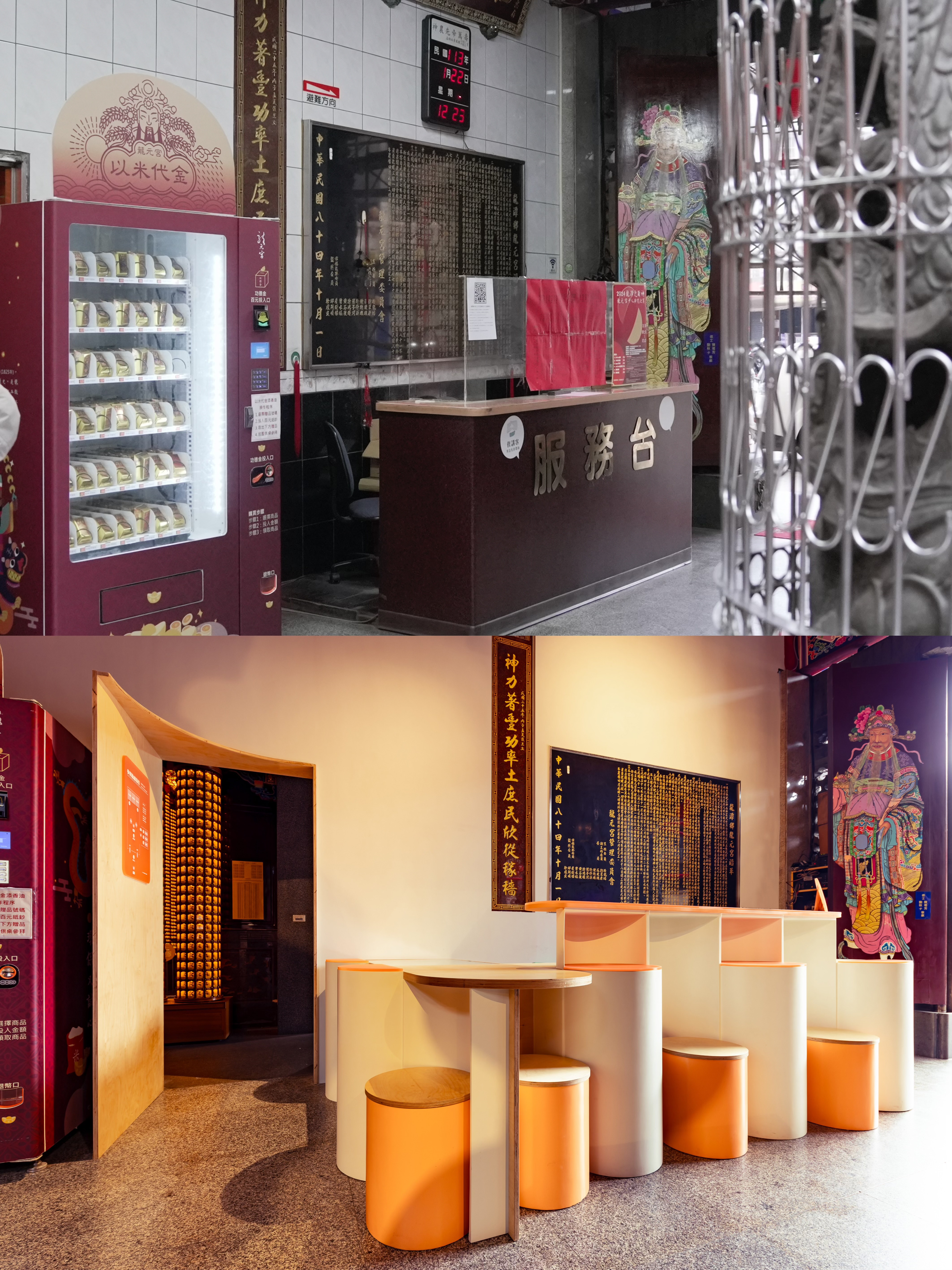
BEFORE / AFTER


✿ TEAM
▧ 指導單位一 文化部、桃園市政府
▧ 主辦單位一 龍潭龍元宮、龍潭文風造庄聯盟
▧ 總 策 展一 Migratory Creation
▧ 策展單位一 ATELIER MIMOSA CO.
▧ 設計團隊一 ATELIER MIMOSA CO.、居樹空間制作坊
▧ 識別設計一 NEU HUANG
▧ 文案調研一 Abby WANG
▧ 協力團隊一 Migratory Creation、宇川設計
▧ 攝 影一 Mon LEE
✿ SPECIAL THANKS
朱慶銘、李育昇、林錦浪、周清萍、徐春喜、徐鳳園、徐雙源、張秀鳳、翁廷燮、曾新蔘、曾金鵬、詹完妹、劉欣怡、劉熒隆、鍾享治、鍾騤晴
朱慶銘、李育昇、林錦浪、周清萍、徐春喜、徐鳳園、徐雙源、張秀鳳、翁廷燮、曾新蔘、曾金鵬、詹完妹、劉欣怡、劉熒隆、鍾享治、鍾騤晴